 TCOT
TCOT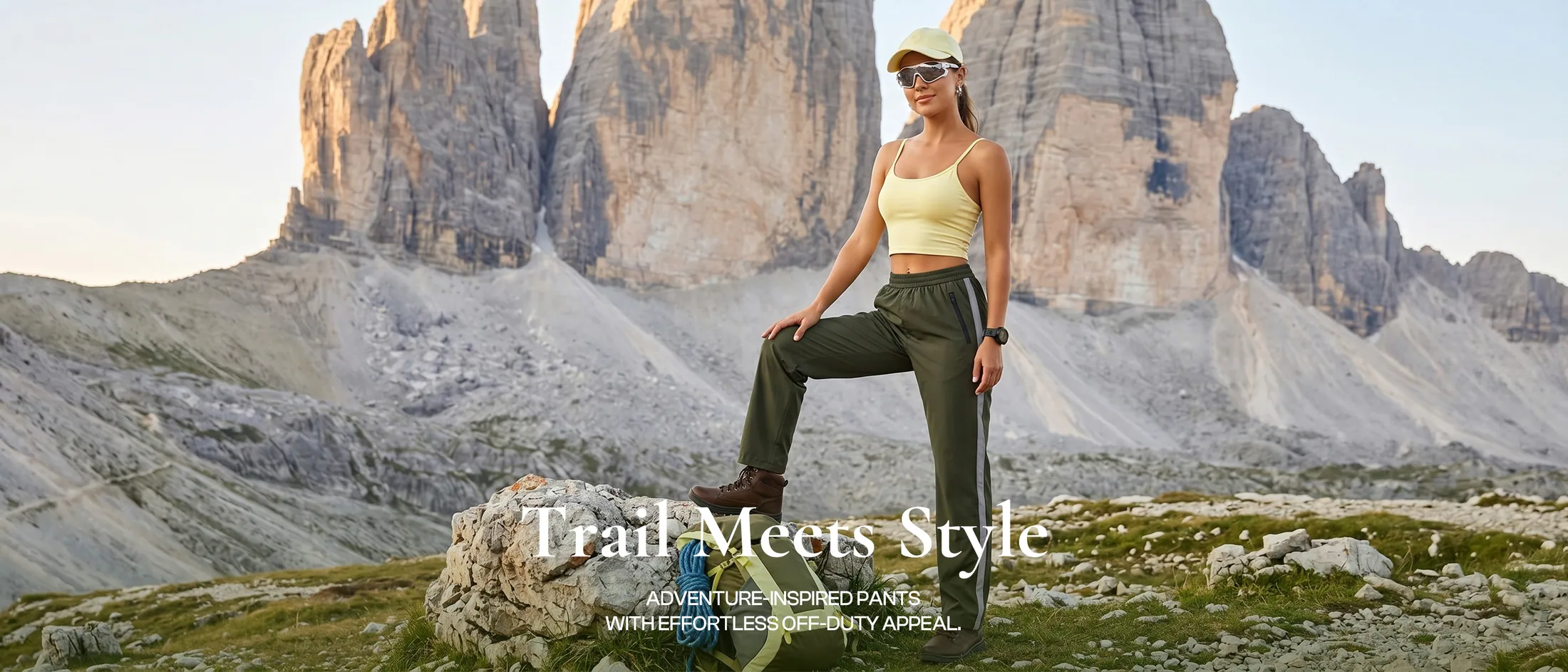
Most wardrobes are built for two temperatures and most days have four. This is the method we use when we design, and it works just as well for choosing what to put on.
The problem with a single warm coat
One warm coat solves January and nothing else. It is too much for a bus, too much for an office, and useless in the fortnight either side of winter that makes up most of the year.
Layers solve the same problem in pieces you can remove. The reason people resist them is bulk, and the reason bulk happens is that each layer was chosen on its own rather than as part of a set.
A layered outfit that works is thinner than a coat, not thicker. If yours is thicker, one of the layers is doing a job another one already does.
Three layers, three jobs
The jobs are simple and they do not overlap. Next to the skin, move moisture and feel decent on its own. In the middle, hold warmth and come off in one movement. Outside, stop wind and water and pack away when it stops.
| Layer | Its job | What it should not do | The usual mistake |
|---|---|---|---|
| Base | Sit close, breathe, look finished alone | Add warmth | Buying it thick, so nothing fits over it |
| Middle | Hold warmth, remove in one movement | Block wind | A pullover you cannot take off at a desk |
| Shell | Stop wind and a shower, fold small | Keep you warm | Buying an insulated jacket for a mild autumn |
Read the last column twice. Almost every layering failure is one of those three, and all three come from asking a single piece to do two jobs.
The base
Tops that finish an outfit on their own
Five from the top shelves, chosen because they read as a finished outfit without anything over them.

Women Shirts and Blouses Cold Shoulder V Neck Short Sleeve Tops

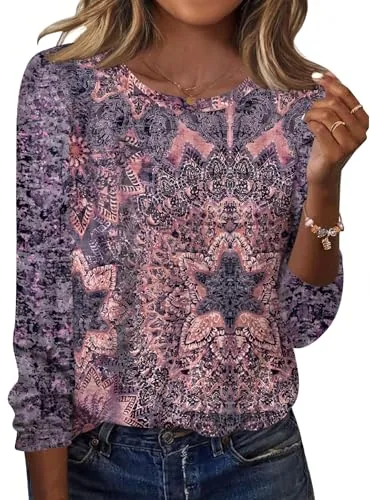
Women's Tops Long Sleeve Crew Neck Tunic Dressy Casual Blouses Shirt
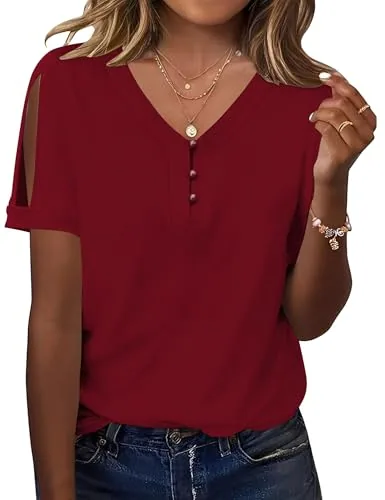
Casual Button V Neck Blouses for Women Short Sleeve Tops Shirts

Womens Tops Fall Long Sleeve Crewneck Dressy Casual Blouses Shirts

Women's Cold Shoulder Tops V Neck Short Sleeve Summer Tee Shirts
The base layer decides the day
A base layer has to survive the moment the middle layer comes off, which is usually in front of other people. That is a design requirement rather than a style preference, and it rules out most technical base layers immediately.
The fibre matters more here than anywhere. Cotton feels wonderful and holds damp. Polyester dries fast and holds smell. A blend does most of both. For a working day with a walk in it, a blend with a little spandex is the plainest good answer.
Length matters as much as fibre. A base layer that rides up when you reach becomes a base layer you keep pulling down, and nobody wears that piece twice. Curved hems help. So does buying the body length rather than the chest measurement.
The middle layer is the one you actually wear
Count the days you wear a coat and the days you wear a cardigan. The cardigan wins by a wide margin, and it is the piece most people spend the least on.
The requirement is that it comes off in one movement. An open cardigan does. A pullover does not, and a pullover over a shirt is how people arrive at a desk warm and stay warm. The TCOT lineup weights the knitwear shelf towards open fronts for exactly this reason.
Weight is the other half. A knit heavy enough for a cold morning is too heavy for the office it ends up in, so the useful middle layer is lighter than instinct suggests. The whole of the TCOT cardigans and sweaters shelf is built around that lighter weight.
What a coated shell really does
Here is the honest version, and it is the reason this guide exists.
A coated nylon shell keeps a shower off. Water beads on the face fabric, runs off, and the coating on the inside stops what gets through the weave. That works for the twenty minutes between a car and a door, for a school run, for a walk that turns unpleasant.
It does not work for six hours of steady rain. Under sustained water the face fabric wets out, the beading stops, and the fabric feels cold and clammy even though the coating is still doing its job. That is not a fault. It is the difference between water resistant and waterproof, and it is why we use the two phrases carefully.
Seams are the other half. A taped seam is sealed. An untaped one lets water through the stitch holes no matter how good the fabric is. If a shell does not say its seams are taped, assume they are not.
| A coated shell | A taped-seam rain jacket | A hard mountain shell | |
|---|---|---|---|
| Rain it handles | A shower | A few hours | A day |
| Packs into | Its own pocket | A stuff sack | A stuff sack, heavier |
| Breathes | A little | Moderately | Well, at a price |
| What it costs | Under thirty dollars as a rule | Middling | Several hundred |
| Who it suits | A commute and a light trail | Regular walking | Real weather, regularly |
Everything on the TCOT rain and outerwear shelf sits in the first column. We would rather tell you that than sell you a shell for a ridge line.
Packability, measured rather than promised
Packable is an easy word to print and a hard one to check on a photograph. The test we use is physical: the jacket has to fold into its own pocket, and the resulting parcel has to fit in the outside pocket of an ordinary handbag.
That is a stricter test than it sounds. A shell that folds into a stuff sack is packable. A shell that folds into itself was designed around the pocket, which constrains the weight of the fabric and the bulk of the hood.
- Fold the shell into its own pocket in a shop if you can. Thirty seconds answers the question.
- Weigh the hood in your hand. A stiff, lined hood is where most of the bulk hides.
- Look for a zip that reverses, so the pocket becomes the bag rather than a separate piece to lose.
- Ignore any number in grams unless the brand says which size it weighed.
The shell
Shells that fold into a handbag
Five from the rain shelf. Each one packs into its own pocket, and each one is a shower layer rather than a mountain jacket.
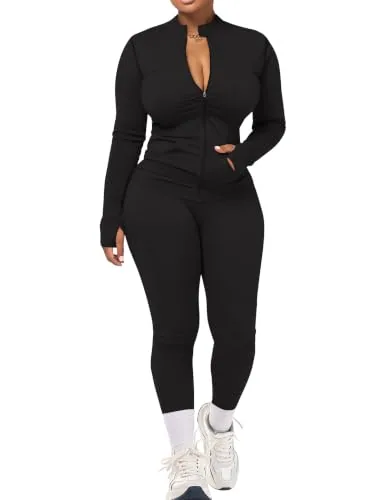
Women Black 2 Piece Athletic Set Yoga Outfit Zip Jacket Leggings
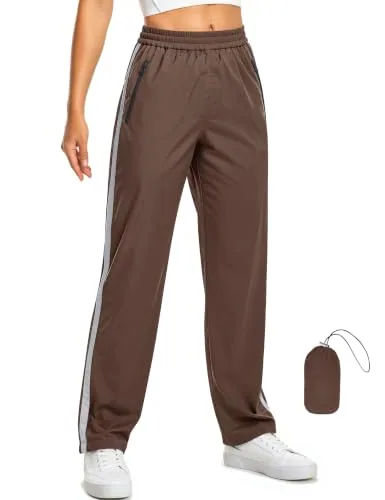
Lightweight Rain Pant Women Outdoor Waterproof Hiking Pants Coffee
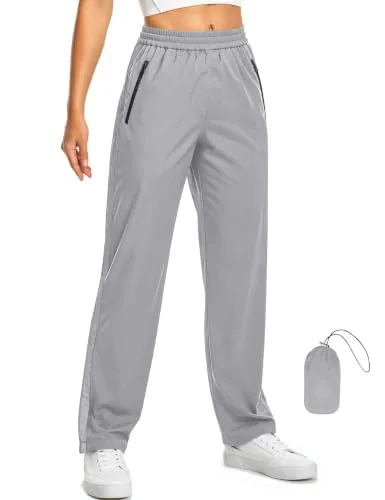
Hiking Pants Women Waterproof Cargo Rain Pant Light Overpants Grey
Hiking Pants Women Waterproof Cargo Rain Pant Light Overpants Grey
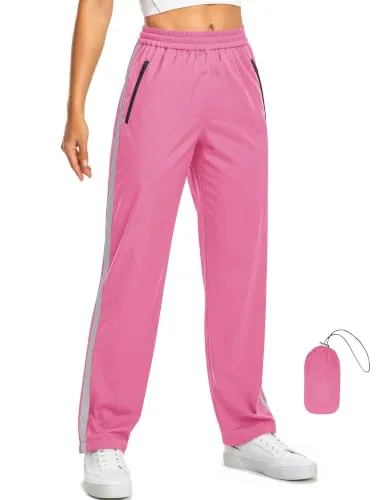
Windproof Rain Pants Lightweight Waterproof Hiking Pant Hot Pink
The same three layers, four seasons
The structure does not change with the weather. What changes is the weight of each layer, and only one of the three changes much.
In summer the base carries the outfit and the middle layer lives in a bag for air conditioning. In autumn the middle layer does the work and the shell comes out twice a week. In spring the two swap back. Winter is the only season where the set genuinely needs a fourth piece.
| Season | Base | Middle | Shell |
|---|---|---|---|
| Summer | Short sleeve, light | Light open cardigan, in the bag | Only if rain is forecast |
| Autumn | Long sleeve | The main piece | In the bag most days |
| Winter | Long sleeve | Heavier knit | Over a warm coat, not instead of it |
| Spring | Either | Light open cardigan | The main piece |
Read the winter row carefully. A packable shell over a warm coat is a sensible combination and a common one. A packable shell instead of a warm coat is the mistake this whole guide tries to prevent.
Building a set that actually combines
Four pieces make eight outfits only if they combine. That is a colour problem rather than a garment problem, and it has a dull, reliable answer.
Keep the middle and outer layers plain and put the interest in the base. A patterned shell limits everything under it. A plain shell limits nothing. This is why so much outerwear is black, navy and olive, and why we keep the print shelves for tops.
- Two neutrals for the layers that go on top, chosen so they work with each other.
- Bases in whatever colour you like, because nothing has to match them.
- One accent piece at most. A red shell is wonderful and it decides the outfit for you.
- Check the set in daylight together, not one at a time in a mirror.
If the accent is the part you want, the TCOT patriotic prints shelf is where the loudest pieces live, and they work best as a base under something plain.
Four pieces, one week
This is the set we pack for a week of mixed weather, and it is the argument for layering in its shortest form.
A short sleeve top and a long sleeve top as bases. One open cardigan as the middle. One packable shell as the outside. Four pieces make eight combinations before you count what is on your legs, and every one of them is a real outfit rather than a compromise.
The set fails in exactly one place: proper cold. Below about eight degrees the cardigan is doing work it cannot do, and you want a fifth piece with some loft in it. We would rather name that limit than pretend a week's packing solves January.
Keeping a shell working
A shell stops beading long before it stops working, and the usual cause is dirt rather than age. Body oils and road grime hold water on the surface, the face fabric wets out, and the jacket feels like it has failed.
Wash it. A cool machine wash with a plain detergent and no fabric softener brings most of the beading back, and a low tumble dry or a warm iron under a cloth reactivates the finish on many fabrics. Read the care label first: it is the maker telling you what they tested.
“The Care Labeling Rule requires manufacturers and importers to attach care instructions to clothing and some piece goods”
That instruction is not a suggestion and it is not a disclaimer. A maker has to hold evidence for every line of it, which makes the care label the most reliable sentence printed on any garment.
The wider version of that argument is in our guide to reading a clothing label, which covers what the care instruction legally has to mean. If the piece you are choosing between comes down to fit rather than fabric, finding your size is the one to read next.
Fabric softener is the one thing to avoid outright. It coats the fibres, and a coated fibre holds water instead of shedding it. One wash with softener can undo a season of good behaviour.
When layering is the wrong answer
Three situations defeat the method, and it is worth naming them rather than pretending otherwise.
Real cold. Below freezing you need loft, and no number of thin layers substitutes for a coat with insulation in it. Layers trap air, and insulation holds a lot more of it.
Sustained rain. Covered above, and the same answer applies: a shower layer is a shower layer. Six hours out in weather is a different purchase.
A dress code that forbids the middle layer. If you cannot wear an open cardigan at your desk, the method loses its most useful piece, and a single well-chosen jacket serves you better than three thin things under it.
Everywhere else, and that is most days for most people, four pieces beat a coat.