 TCOT
TCOT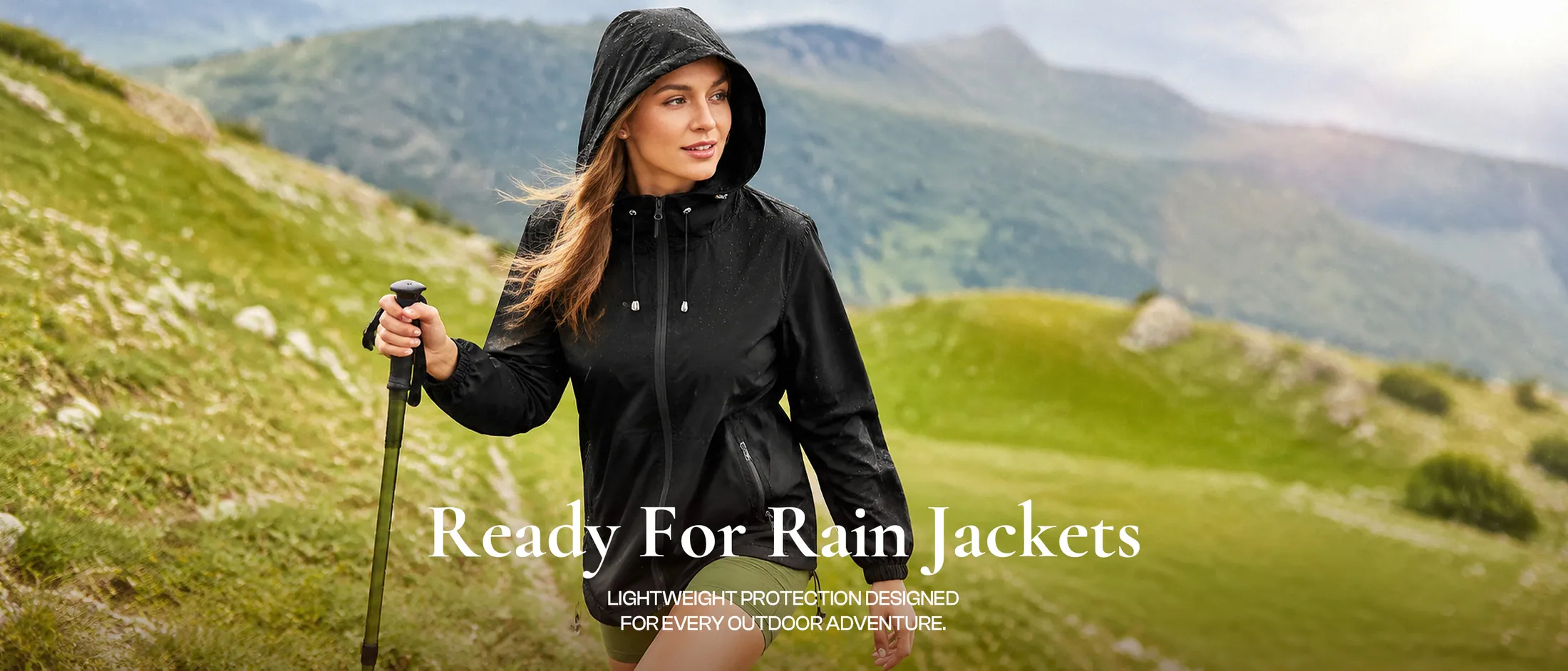
A medium in one shop is a large in another and a small in a third. That is not carelessness, it is the absence of a standard, and it means the letter on a label carries less information than almost anything else printed on it.
The size letter is a label, not a measurement
There is no legal size standard for women's clothing in the United States. Every brand sets its own chart, and a brand that sells to a younger market usually sets it smaller than one that does not.
So the letter tells you where a garment sits inside one brand's range and nothing about where it sits inside another's. Comparing a medium here with a medium elsewhere is comparing two private decisions.
The way out is dull and it works: stop reading letters and start reading centimetres.
Measure a garment, not yourself
Measuring a body is hard, inconsistent and unpleasant. Measuring a garment that already fits is easy, repeatable and answers the question directly.
Find the top you like most, lay it flat, and measure it. Write the four numbers down and keep them in a note on your phone. From then on you are comparing a garment with a garment, which is the only comparison that means anything.
| Measurement | How to take it | Why it decides the fit | Tolerance |
|---|---|---|---|
| Chest, flat | Armpit to armpit across the front | The single number that predicts fit best | Two centimetres either way |
| Body length | Back neck seam to hem | Whether it covers what you want covered | One centimetre |
| Sleeve length | Shoulder seam to cuff | Where the cuff sits when you reach | Two centimetres |
| Shoulder width | Seam to seam across the back | Whether the sleeve hangs or pulls | One centimetre |
Double the flat chest measurement to compare with a brand chart quoting a circumference. Most charts quote body measurements rather than garment measurements, which is where half the confusion comes from.
One thing the label does carry reliably is what the garment is made of, and that is a legal requirement rather than a courtesy.
“The Rules require that labels identify manufactured fibers using the fiber's generic names”
Fibre predicts stretch, and stretch predicts how far a measurement will move on your body. Read that line before you read the chart.
Easy to judge
Pieces where the fit is forgiving
Five long sleeve tops with a relaxed body, which are the easiest pieces to get right on a first order.
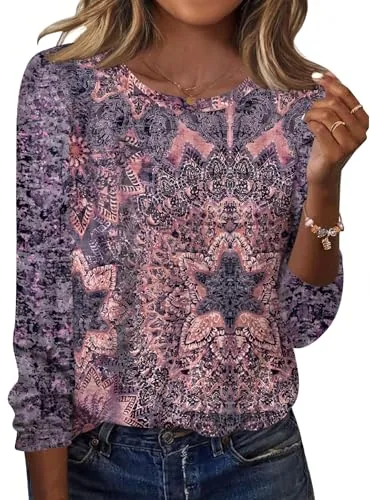
Women's Tops Long Sleeve Crew Neck Tunic Dressy Casual Blouses Shirt

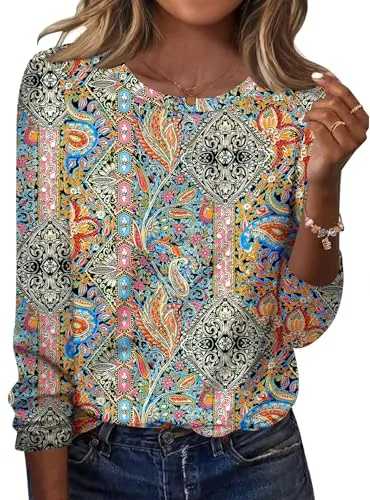
Womens Tops Fall Long Sleeve Crewneck Dressy Casual Blouses Shirts
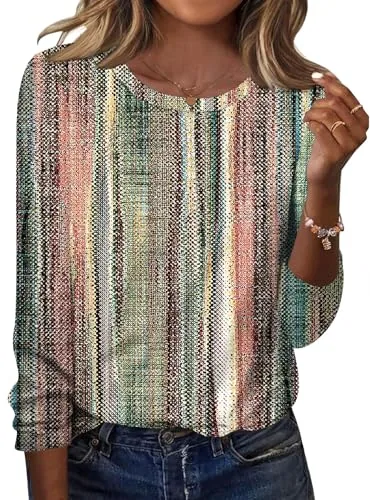
Women's Plus Size Tee Shirts Loose Casual Long Sleeve Tunic Tops
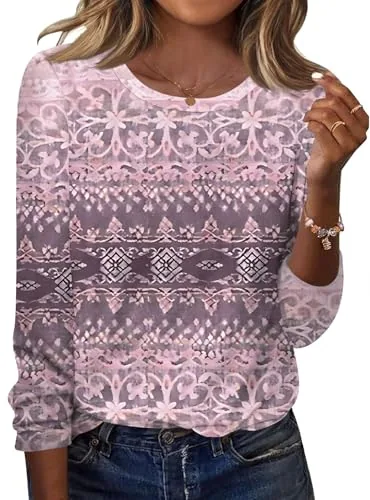
Crew Neck Tops for Women Long Sleeve Business Casual Blouses Shirts
Womens Long Sleeve Shirts Crew Neck Dressy Casual Blouses Tunic Tops
Four measurements that decide a fit
Chest decides whether a garment fits. The other three decide whether you like it.
Body length is the one people underestimate. Two centimetres is the difference between a tunic that covers the back pockets and one that does not, and that difference decides whether a piece works over leggings.
Shoulder width is the one that makes a garment look bought rather than borrowed. Too wide and the sleeve head hangs. Too narrow and the sleeve pulls when you reach forward. A knit forgives both. A woven shirt forgives neither.
Sleeve length matters least on a knit and most on a shell, because a shell sleeve that rides up lets water in at the wrist. That is worth a thought on the TCOT rain and outerwear shelf specifically.
Between two sizes
The advice to size up is only half right, and which half depends on the piece.
In knitwear, take the larger size. A cardigan wants room. A snug one reads as a jumper that went wrong, and knit stretches into the shape you give it.
In shells, take the smaller size. A shell already has room built in for the layers underneath, and a roomy shell reads as a borrowed coat. If you plan to wear it over a thick knit, that is the argument for the larger one.
In a woven top with a button front, take the size that fits your chest and accept the rest. Buttons are unforgiving in exactly one place, and no amount of length compensates.
Sizes change, and so do you
A wardrobe that fits is a wardrobe measured more than once. Bodies change over a year, patterns change between runs, and a brand that was reliable in spring can grade differently by autumn.
So re-measure the reference garment once a year rather than trusting a number written down in 2023. It takes two minutes and it prevents the slow drift where every new piece is slightly wrong in the same direction.
The same applies to a piece you loved and wore out. Measure it before it goes, because the replacement will be chosen against that memory whether you have the numbers or not.
None of this is about being a particular size. It is about buying the right one on the first attempt, which is a practical matter and not a moral one.
What a plus size cut actually changes
A plus size garment is not a small one scaled up. Or rather, it should not be, and the difference between the two is visible immediately.
Grading up multiplies every measurement by the same factor, so the shoulders widen at the same rate as the body. The result is a garment that fits at the chest and hangs off the shoulder. That is why so many scaled-up pieces look wrong on the person they were made for.
A separate plus pattern changes the measurements at different rates. Body width and length grow. Shoulder width grows much less, and armhole depth grows more than either. TCOT pieces in the plus sizes are cut this way, which is the reason those sizes sit on their own pattern block.
You can spot the difference on a photograph. If the sleeve head sits out past the point of the shoulder on the larger sizes, the pattern was graded rather than drafted.
What is actually available in each size
A size chart tells you what a brand believes exists. This table is counted from the pieces on the shelves today, which is a different and more useful number.
| Size | Pieces on the shelf | Shelves it appears on | Starts at |
|---|---|---|---|
| S | 167 | 7 | $8.79 |
| M | 61 | 7 | $9.99 |
| L | 75 | 7 | $9.49 |
| XL | 64 | 7 | $9.49 |
| XXL | 44 | 7 | $9.49 |
| 3XL | 24 | 5 | $9.49 |
Where a size shows a small number, it is not a statement about that size. It means the pieces cut in it are between runs, and the count changes when we update prices.
Fabric changes the size you need
The same measurements in two fabrics are two different garments, and a fibre line predicts this better than a photograph.
| Fabric | Give | What to do about it | After a wash |
|---|---|---|---|
| Cotton jersey | Some, in one direction | Take your measured size | May shrink a little in length |
| Cotton with spandex | Plenty, in both | Take your measured size or one below | Recovers well for a season or two |
| Rayon or viscose | Drapes rather than stretches | Take your measured size | Can grow slightly in length |
| Woven polyester | Almost none | Measure carefully, do not guess | Stable |
| Coated nylon shell | None at all | Size for the layers underneath | Stable |
| Chunky knit | A lot, and it stays | Take the smaller size | Grows with wear |
The last row catches people. A chunky knit that fits perfectly in a shop is a chunky knit that will be looser by March, because the weight of the yarn pulls it down over a season.
What a product photograph will not tell you
A photograph answers colour and shape and nothing about fit. The model is one height, one size and standing still, and none of those three is you.
Two things in a photograph are worth reading anyway. The first is where the hem falls relative to the hand: a hem at the wrist bone is a tunic, a hem above it is a top, and that is visible even when no measurement is given. The second is the shoulder seam, which tells you whether the garment is cut for a shoulder or dropped deliberately.
What a photograph hides is drape. A fabric that looks crisp under studio lighting can be limp in a room, and the fibre line is the only warning you get. Rayon photographs stiffer than it wears, and polyester photographs softer.
Where a piece is photographed on a hanger rather than a person, treat the shape as decoration. A hanger holds a garment in a way a body never will.
Reading other people's fit notes
Fit comments are the most useful thing written about a garment by anyone who is not selling it, and they need reading rather than counting.
A single note saying runs small is weak evidence. Ten notes saying runs small in the shoulder is a measurement. What you are looking for is agreement about a place, not agreement about a direction.
Ignore comments that give no height or usual size. Runs large from someone who did not say what they normally wear is a sentence about a stranger.
And weigh a complaint about length differently from a complaint about width. Length is a preference and people disagree honestly about it. Width is a fit, and disagreement about width usually means the pattern moves between runs.
Ordering when you cannot try it on
This is the order we suggest, and it is the same one we use ourselves.
- Measure the garment you already like and write the four numbers down once.
- Read the fibre line before the size chart. It tells you how much the number will move.
- Take the chest measurement as the decision and treat the rest as preferences.
- In knitwear round up, in shells round down, in button fronts fit the chest.
- Order one piece from a new range before you order three. A first piece is a measurement.
Everything above is about the numbers. What those numbers sit on is fibre and construction, and that is in reading a clothing label. If you are working out what to buy rather than which size, layers that earn their place is the other half of the answer.
One last thing worth saying plainly. If a piece arrives and it is wrong, that is not a failure of measuring, it is the ordinary cost of buying clothes without touching them. Sizing well makes it rarer, not impossible.